
Should borrowers opt for gold loans when prices are high and volatile? Check gold price, LTV, and risks
Read Time:4 Minute, 26 Second
Gold is a popular safe-haven during uncertainty and short-term cash needs, especially when emergency funds are exhausted and it serves as a hedge in your portfolio, but add risks when prices are high and volatile.

- Gold loans provide quick cash with rates from 8.5%
- High gold prices mean higher loan amounts but increased risk
- Gold loan borrowers risk margin calls if prices drop
Gold loans function much like other retail loans offering quick disbursal, minimal paperwork and flexible repayment options. What distinguishes them, however, is the collateral: physical gold whose value moves in line with market prices.
That market value has been on a sharp upswing. Gold loans have surged in recent years, with Reserve Bank of India (RBI) data showing outstanding gold loans jumping nearly 128 percent year-on-year to over Rs 3.3 lakh crore by late 2025, even as overall bank credit growth remained in single digits.
The rally in gold prices has played a key role. The precious metal has nearly doubled over the past year, driven by geopolitical tensions, safe-haven demand, central bank buying and the recent escalation of conflict between the US, Israel and Iran. On March 3, 24-carat gold was trading at Rs 1.66 lakh per 10 grams, delivering returns of more than 80 percent over the past year.
With prices elevated and volatility high, gold loans continue to offer quick liquidity, relatively lower interest rates and shorter tenures. But should borrowers rush in when gold is trading near record levels?
Currently, financial institutions are offering gold loans starting from 8.50 percent per annum. Here’s how interest rates on gold loans offered by financial institutions have moved as of Feb. 27, 2026.

Public sector banks have a deeper presence than other lending institutions, offer higher disbursements, and lower rates on gold loans. The RBI’s lower repo rate, currently at 5.25 percent, has led many banks to lower their lending rates.
Most financial institutions offer both fixed and floating interest rates on gold loans. Axis Bank, for example, offers a gold loan at a fixed interest rate of up to 17 percent, whereas its repo-linked rate starts at 9.75 per cent. Karur Vysya Bank offers up to 14 percent fixed rate on gold loans.
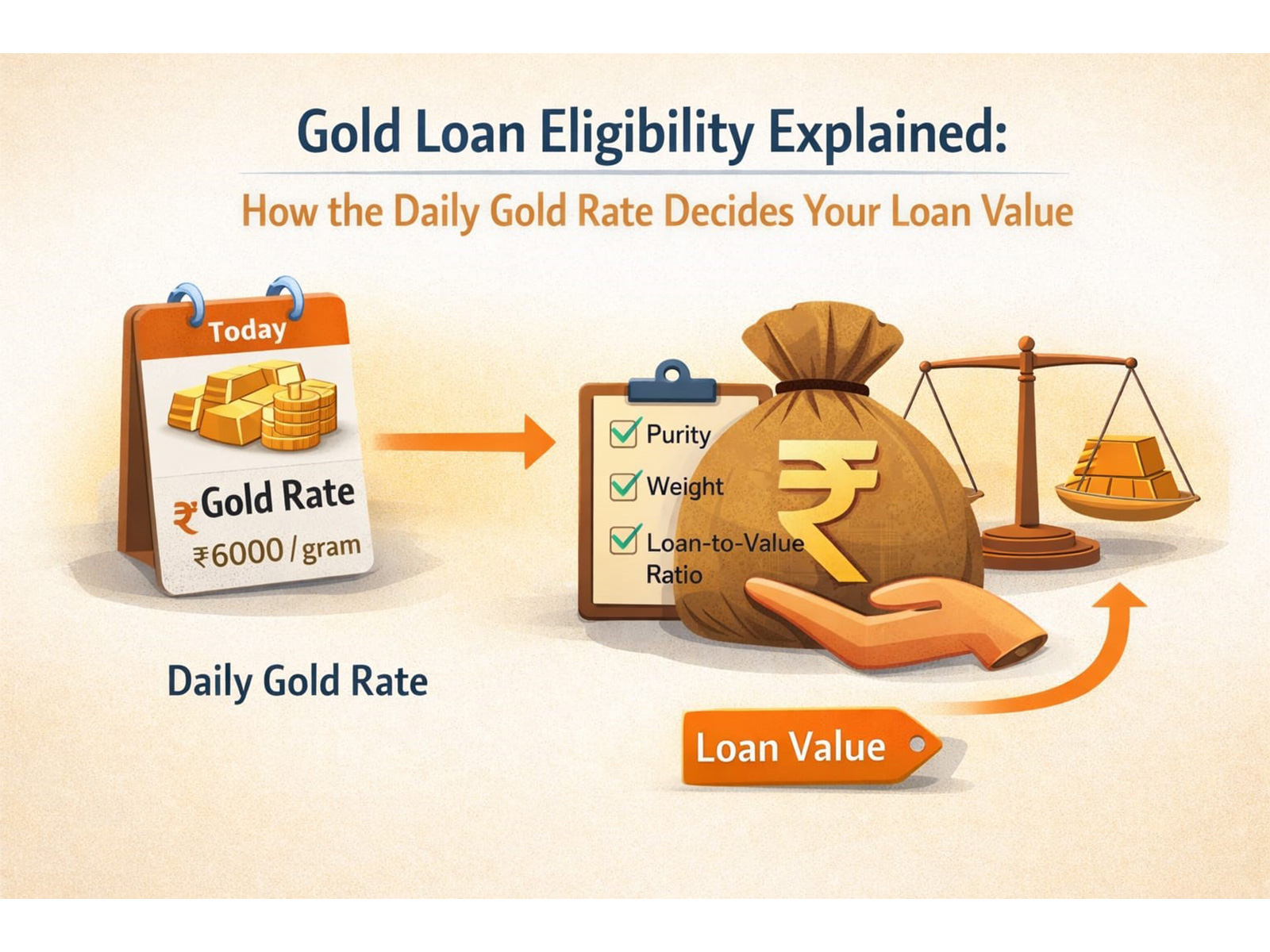
The Reserve Bank of India mandates regulated entities (REs) to maintain the highest permitted loan-to-value (LTV) ratio at the time of gold loan disbursal. The LTV is crucial to determine how much loan you get. It’s also used to adjust price volatility against your gold loan.
Here’s the RBI’s guidance for REs on valuing LTV ratios and assaying gold and silver as collateral for registered entities.

Should you opt for gold loan when prices are high and volatile?
Gold is widely regarded as a safe-haven asset during periods of uncertainty, especially when short-term liquidity is urgently needed, and you’ve already exhausted your emergency funds. There are, however, consequences borrowers should be aware of when opting for gold loans, given that precious metal prices are currently trading high and volatile.
“Volatility in gold prices often causes significant confusion among borrowers. Most of them wonder whether gold loans are a prudent short-term funding option,” said Manish Bansal, Managing Director of Surya Loan.
Bansal argues that when gold prices fluctuate sharply, the risk of margin calls or additional collateral requirements also increases.
This means that if a borrower secured a loan against 75 percent LTV of his gold jewel or coin, the ratio will be adjusted upward if the gold’s real market price falls. This way, the borrower may end up paying more interest on the loan.
“This can potentially strain cash flows,” said Bansal, adding that the right choice of risk-taking depends on the borrower’s risk appetite, repayment capacity, and the purpose of borrowing.
But that is not the case for gold loans with a fixed interest rate, which remains constant throughout the tenure, but investors have to pay almost double the prevailing floating rate of interest.
“While the declining policy rates may be an advantage for repo-linked gold loans, they expose the borrowers to interest rate movements that make repayment planning typical,” Bansal said.
Checklist for borrowers to get gold loans
Financial institutions perform checks and balances before disbursing gold loans. Borrowers must have KYC documents (identity proof and address proof) and gold jewellery or coins that can be pledged, along with bills to prove ownership.
Assaying and valuations of your gold is performed to determine its purity and the maximum loan you can receive. An individual can pledge up to 50 grams of total gold jewels, bars, and coins of 22-carat and 24-carat purity, or 18-carat in some cases.
Also, there are fees for processing the gold loan, assaying and documentation, valuation, in addition to 18 percent goods and services tax (GST), as applicable. Financial institutions also detail these charges on the final loan copy agreement, and prevailing rates are available on their official portal.Disclaimer: The views and investment tips expressed by experts on Moneycontrol.com are their own and not those of the website or its management. Moneycontrol.com advises users to consult certified experts before making any investment decisions.


Happy
0 %

Sad
0 %

Excited
0 %

Sleepy
0 %

Angry
0 %

Surprise
0 %
 0
0
 0
0







Average Rating