
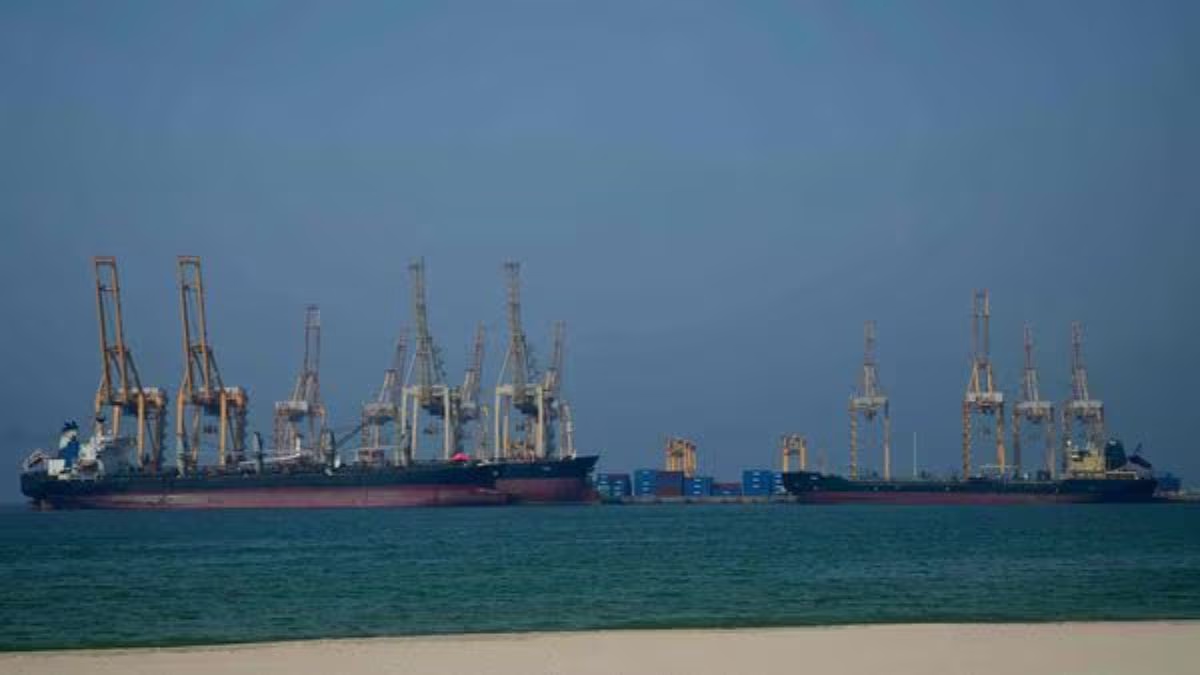
Hormuz transit costs may rise up to 50% as war-risk premiums spike, $14-bn oil bill exposure for India
Read Time:2 Minute, 57 Second
Industry estimates cited by the Financial Times indicate that war-risk premiums, which had been around 0.25 percent of a vessel’s value, could increase by up to 50 percent as insurers reassess exposure in the Gulf region

- Hormuz transit war-risk insurance may increase by 50%
- India faces higher oil import costs due to increased premiums
- Container and bulk carriers also see new war-risk surcharges
War-risk insurance premiums for vessels transiting the Strait of Hormuz are expected to rise by as much as 50 percent following the escalation of hostilities between the United States and Iran, according to multiple international shipping and insurance reports.
Industry estimates cited by the Financial Times indicate that war-risk premiums, which had been around 0.25 percent of a vessel’s value, could increase by up to 50 percent as insurers reassess exposure in the Gulf region.
For a crude tanker insured at $100 million, this implies an increase in voyage-specific war-risk cover from roughly $250,000 to about $375,000 per transit, significantly raising the cost base for energy shipments.
The repricing reflects both the probability of direct military engagement and the risk of collateral disruption, including missile strikes, naval interception, or port closures.
Insurers typically levy war-risk premiums as an additional charge on top of standard hull and machinery insurance, and these are payable upfront for each voyage through a designated high-risk area.
The impact on India is material because roughly 50 percent of its crude imports, about 2.6 million barrels per day, transit through Hormuz.
Analysts estimate that every $10 per barrel rise in crude prices increases India’s annual oil import bill by approximately $13–14 billion.
That macro estimate captures price effects but excludes additional freight and insurance costs.
When war-risk premiums rise by up to 50 percent and freight rates adjust upward to compensate for higher insurance, fuel burn, and crew risk allowances, the cumulative cost per cargo increases further before the crude even reaches Indian refineries.
Container carriers have also begun imposing war-risk surcharges on Gulf-bound cargo.
Hapag-Lloyd, for instance, announced war-risk surcharges ranging from $1,500 per standard container to $3,500 for reefer and special equipment shipments from early March 2026.
While containerised cargo is distinct from crude tankers, the pricing signal underscores a broader repricing of maritime risk across vessel classes. Bulk carriers transporting coal and other commodities are exposed to similar insurance adjustments when transiting designated risk areas.
The insurance market response is occurring alongside broader freight volatility.
News reports suggest that vessels may opt to reroute around the Cape of Good Hope to avoid high-risk Gulf passages if tensions escalate further, potentially adding 10-14 days to transit times and raising fuel and charter costs.
Even without full rerouting, elevated risk classifications tend to reduce effective vessel availability and push spot freight rates higher, compounding insurance-led cost pressures.
India’s vulnerability is amplified by the absence of a domestic Protection and Indemnity (P&I) insurance base.
P&I cover is essential for third-party liabilities such as pollution, collision damage and crew injury, and without internationally recognised cover vessels cannot call at most ports.
Indian shipowners and charterers rely predominantly on foreign P&I clubs, meaning pricing, coverage limits and underwriting decisions during geopolitical crises are externally determined.
When international clubs withdraw or reprice coverage in response to conflict, Indian trade has limited capacity to cushion the impact.


Happy
0 %

Sad
0 %

Excited
0 %

Sleepy
0 %

Angry
0 %

Surprise
0 %
 0
0
 0
0


Average Rating